How IPA Improves Your English Pronunciation and Listening
Spelling hides the sounds you get wrong. See how reading IPA improves your English pronunciation and listening, with 4 examples for students.
Reading IPA improves your pronunciation because it shows the sounds that English spelling hides: which ending -ed takes, which syllable is stressed, which two vowels are different. Once you can see the difference, you know exactly what to practice instead of guessing from letters.
You have learned a word, you can spell it, and you say it in class. Your teacher repeats it back to you, and it sounds different. You try again and make the same mistake, because nothing in the spelling tells you what you did wrong.
That is the problem IPA solves. It does not make your mouth move differently by itself. It shows you, symbol by symbol, where your version and the real one are different, so your practice goes to the right place. If you have been asking how to improve English pronunciation on your own, this is where to start. This article explains the 4 reasons IPA works for pronunciation, with examples students meet at school, the mistakes students make when they first use it, and the one thing IPA cannot do for you.
If you have not met the International Phonetic Alphabet before, start with what the IPA is. It takes about five minutes.
Reason 1: English Spelling Does Not Tell You the Sound
English spelling does not match English sounds one to one, so reading letters makes you guess. The same letters spell different sounds, and different letters spell the same sound. The International Phonetic Alphabet fixes this with a simple rule: one symbol, one sound.
| Spelling | Words | IPA (American) | What spelling hides |
|---|---|---|---|
| -ed | played, worked, wanted | , , | three different endings |
| -s | dogs, cats, buses | , , | three different endings |
| ough | though, through, thought | , , | three different vowels |
| a | cat, father, about | , , | three different vowels |
Every row in the table is a place where a student who reads only the spelling will say one sound for all three words. The -ed and -s rows are also what school tests ask about most, usually as "choose the word whose ending is pronounced differently." IPA shows the rule that spelling hides: the ending depends on the last sound of the word, not its last letter. Learn these words with IPA, and on the test you apply that rule instead of guessing.
The IPA in this article uses the symbols most learner dictionaries use. IPAtranslator writes a few of the same sounds differently: for and , for , and for /e/, so worked appears there as . The sounds are the same; only the symbols differ.
Reason 2: Your Own Alphabet Changes English Sounds
Writing English pronunciation in your own alphabet makes you say English with your own language's sounds. Students do this naturally: Japanese students write English words in katakana, Vietnamese students use Vietnamese letters, and Russian students use Cyrillic. It feels helpful, but each of these systems only has the sounds of its own language.
The result is predictable. A sound English has and your language does not, such as the quiet "th" in think or the vowel in cat, gets replaced by the nearest sound you already know. Think turns into sink or tink, and bad moves toward bed. You are not being careless. Your writing system simply had no way to show the difference.
The same pattern shows up in every language, only with different sounds. The table lists substitutions that teachers commonly report for four groups of learners. Not every student makes all of them, but if you recognize one, that is the sound to practice first.
| Your first language | How English gets written | A common substitution | The IPA that shows the difference |
|---|---|---|---|
| Japanese | katakana | light and right both become ライト | vs |
| Vietnamese | Vietnamese letters | the last consonant of a group dropped, so worked sounds like work | vs |
| Russian | Cyrillic | /w/ said as /v/, so west sounds like vest | /west/ vs /vest/ |
| Spanish | Spanish spelling | and /i/ merge, so ship sounds like sheep | vs |
Look at the last column. Each pair differs by exactly one symbol, and that one symbol is the whole lesson. Your own alphabet writes both words the same way, so it can never point you to it.
IPA has a separate symbol for every English sound, including the ones your language lacks. Seeing instead of a familiar letter is a signal that this sound is new and needs practice. That signal is exactly what your own alphabet removes.
One of these new sounds is worth extra practice. The voiced "th" appears in fewer than 1 in 100 dictionary words, but in about 1 in 10 of the words you actually read, because the, this and that all use it. (This is our own estimate, calculated from the data currently in the IPAtranslator pronunciation dictionary and weighted by how often each word appears in written English.)
Reason 3: You Cannot Fix a Difference You Cannot See
A difference you do not notice is a difference you will not practice, and spelling hides the differences that matter most. Ship and sheep look like a small spelling change, but in IPA they are and : two different vowels, not one vowel said longer. Many students say both the same way for years because nothing ever showed them the contrast.
Research on language learners supports this order: hear the difference first, then say it. In a well-known study by Ann Bradlow and colleagues (1997), Japanese learners who were trained only to tell English /r/ and /l/ apart by listening also tended to pronounce the two sounds better, without any speaking practice. That study tested listening training, not IPA. IPA's job comes one step earlier: it tells you which difference to listen for.
IPA makes that first step visible on paper. It also shows word stress, which spelling never marks. The symbol ˈ goes before the strong syllable:
| Word | IPA (American) | Say it as |
|---|---|---|
| photograph | PHO-to-graph | |
| photography | pho-TOG-ra-phy | |
| record (noun) | RE-cord | |
| record (verb) | re-CORD |
Wrong stress can make a correct set of sounds hard to understand, and it is invisible in spelling. In IPA it is one mark you can check in a second.
Reason 4: Words Sound Different in a Sentence
Words sound different in a sentence because fluent speakers join them, weaken small words and drop some sounds. This is called connected speech, and it is why you can know every word and still not catch a sentence when you hear it. A dictionary shows each word alone, so even dictionary IPA only tells half the story.
Small words such as the, to, and and can change most. Most of the time they use the schwa , the short, relaxed "uh" sound. Our guide to how to pronounce "to" shows the pattern in detail.
| Phrase | Word by word (dictionary) | Connected speech | What changed |
|---|---|---|---|
| an apple | an weakens and joins apple | ||
| stop it | the /p/ joins it | ||
| going to | to weakens to | ||
| want to | the two words become wanna |
Accents change words too. IPA is not just a key to one dictionary accent. It can write every accent with the same symbols, which makes it a listening tool as well. Here are three words in American and British English (see the full comparison):
| Word | American | British | What changes |
|---|---|---|---|
| car | British English drops the r after a vowel | ||
| hot | a different vowel | ||
| dance | a different vowel |
Other accents have their own patterns too. Many Indian English speakers, for example, use one sound for both v and w (Indian English phonology), and regional accents of English lists many more. When you know that an accent changes a few sounds in a regular way, an unfamiliar speaker becomes easier to follow, though you still need to listen to that accent often.
IPAtranslator shows both views for your own sentences. The English to IPA converter gives the dictionary form of every word, free without an account for up to 500 characters, in American or British English. On the IPAtranslator home page, Spoken IPA shows one common way the sentence is said, and Show Original highlights each change. Spoken IPA uses credits: 5 to try without an account, and 5 a day with a free account.
IPA Mistakes That Keep Students' Pronunciation Stuck
Students who start using IPA to improve their English pronunciation tend to make the same three mistakes. Each one is easy to fix once you know it is there.
Memorizing the whole chart before using it. The full chart has well over 100 symbols, and English uses only part of it. Students who try to learn every symbol first often give up before they reach a real word. Fix: learn symbols only when you meet them in words you are studying, and start with the ones your own language does not have.
Reading IPA without listening. A symbol on paper has no sound until you connect it to one. Students who only read IPA know that think starts with and still say /s/. Fix: every time you look up a new symbol, play the word and copy it out loud before you move on.
Mixing British and American IPA. The two systems use slightly different symbols, so a student using a British dictionary and an American teacher can end up with two "correct" answers that disagree. Fix: choose the accent your school or exam uses and look up every word in the same kind of dictionary.
What IPA Cannot Do on Its Own
IPA cannot train your ears or your mouth by itself. It tells you what the target sound is and where your version is different; it does not make the sound for you. A student who reads IPA silently and never listens or speaks will understand the problem and still keep it.
Use IPA as the map, and use audio for the practice. A simple loop works for most students:
- Look up the IPA of a word or sentence from today's lesson.
- Find the one symbol you were saying wrong, such as , or the -ed ending.
- Listen to a native recording of the word and copy it out loud.
- Record yourself and compare, checking only that one symbol.
For a full daily routine that pairs IPA with text-to-speech, see our 5-step pronunciation practice method with IPA.
Frequently Asked Questions
Yes, when you use it with listening and speaking. IPA shows the target sound, so you can compare it with what you say and find the difference, which spelling cannot do. The improvement comes from practicing that sound with audio. IPA on its own explains the problem but does not train your mouth.
No. The full IPA chart covers every language, but English uses only part of it. Standard British English is usually taught with 44 sounds. Most consonants look like normal letters, so the real work is the vowels and a few new shapes such as , , and .
Your own alphabet only has the sounds of your language. English sounds that your language lacks, such as or , get replaced by the nearest familiar sound, and you end up practicing the wrong one. IPA gives each English sound its own symbol.
Learn the one your school, textbook or exam uses. The symbols are almost the same; the main differences are a few vowels, the length mark ː and whether a final /r/ is pronounced. Once you can read one system, switching is easy.
Yes. Many school tests ask which word's underlined part is pronounced differently, often the -ed or -s ending or a vowel. The test will not show you the IPA, but if you learned the words with it, you know the rule: the ending depends on the last sound of the word, not its last letter.
No. Phonics teaches how letters map to sounds when you read and spell. IPA skips spelling and writes each sound with one symbol. Phonics helps you guess how a word sounds; IPA tells you exactly, which is why dictionaries use it.
Conclusion: Reading IPA Shows You What to Practice
Reading IPA improves your pronunciation because it turns a vague feeling ("I sound wrong") into one specific symbol you can practice. It shows endings that spelling hides, sounds your own alphabet cannot write, stress that letters never mark, and the changes words go through in a sentence and between accents. That last part is why IPA helps your listening as well as your speaking.
A good first test: paste "We played, worked and rested all day" into the English to IPA converter. Find the three different -ed endings, then switch to Spoken IPA on the home page to see how the sentence joins up.
Author

Categories
More Posts
How to Use IPAtranslator: Full Sentences to IPA in One Pass
Paste full sentences, scripts, or paragraphs and get IPA in one pass — a step-by-step guide to IPAtranslator's Standard IPA, Spoken IPA, and TTS features.
10 Common English Pronunciation Mistakes and How to Fix Them
See 10 common pronunciation mistakes ESL learners make — th, r/l, v/w, and vowel swaps — with reference IPA, minimal pairs, and a fix for each.
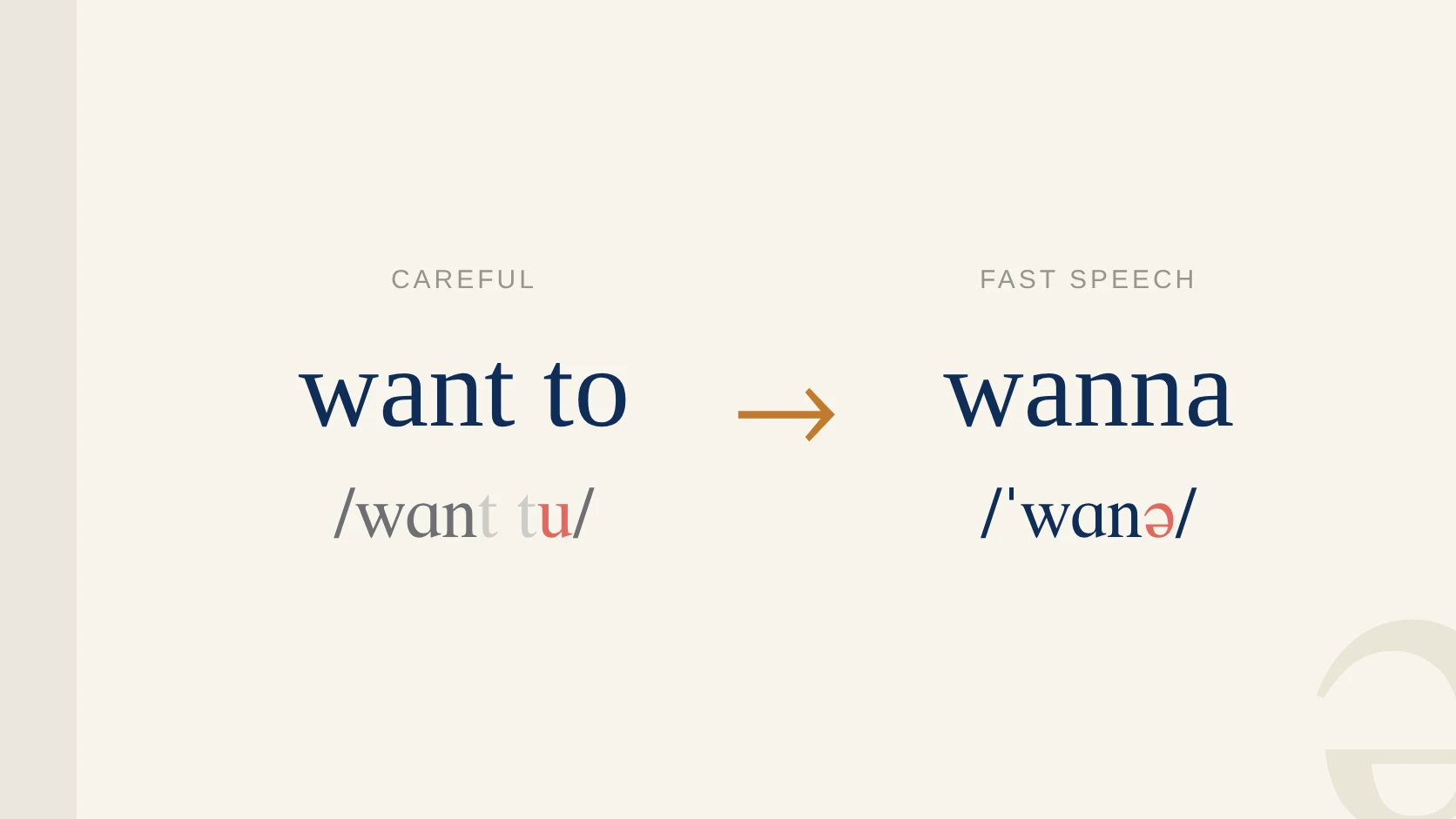
Why Does "Want To" Sound Like "Wanna"? Where the T Goes
Why want to becomes wanna, where the T goes, and the in-between versions you will hear. Plus the cases where wanna sounds wrong to native speakers.