LogoIPAtranslator
  • Pricing
  • Blog

Why IPAtranslator

  • No credit card required to start
  • Standard dictionary IPA is always free
  • Cancel or change plans anytime from your billing page
  • Questions? support@ipatranslator.com — we usually reply within 1 business day
LogoIPAtranslator

Translate English text into standard and spoken IPA.

support@ipatranslator.com

Email us anytime — we usually reply within 1 business day.

Tools
  • IPA Translator
  • English to IPA Converter
  • Phonetics
  • Phonetic Spelling Generator
  • Pronunciation Practice
  • Type IPA
  • Features
  • Pricing
  • FAQ
Company
  • About
  • Blog
  • Contact
Legal
  • Cookie Policy
  • Privacy Policy
  • Terms of Service
  • Refund Policy
© 2026 IPAtranslator. All Rights Reserved.

Connected Speech

How English pronunciation changes in natural, flowing speech — including weak forms, reductions, and linking.
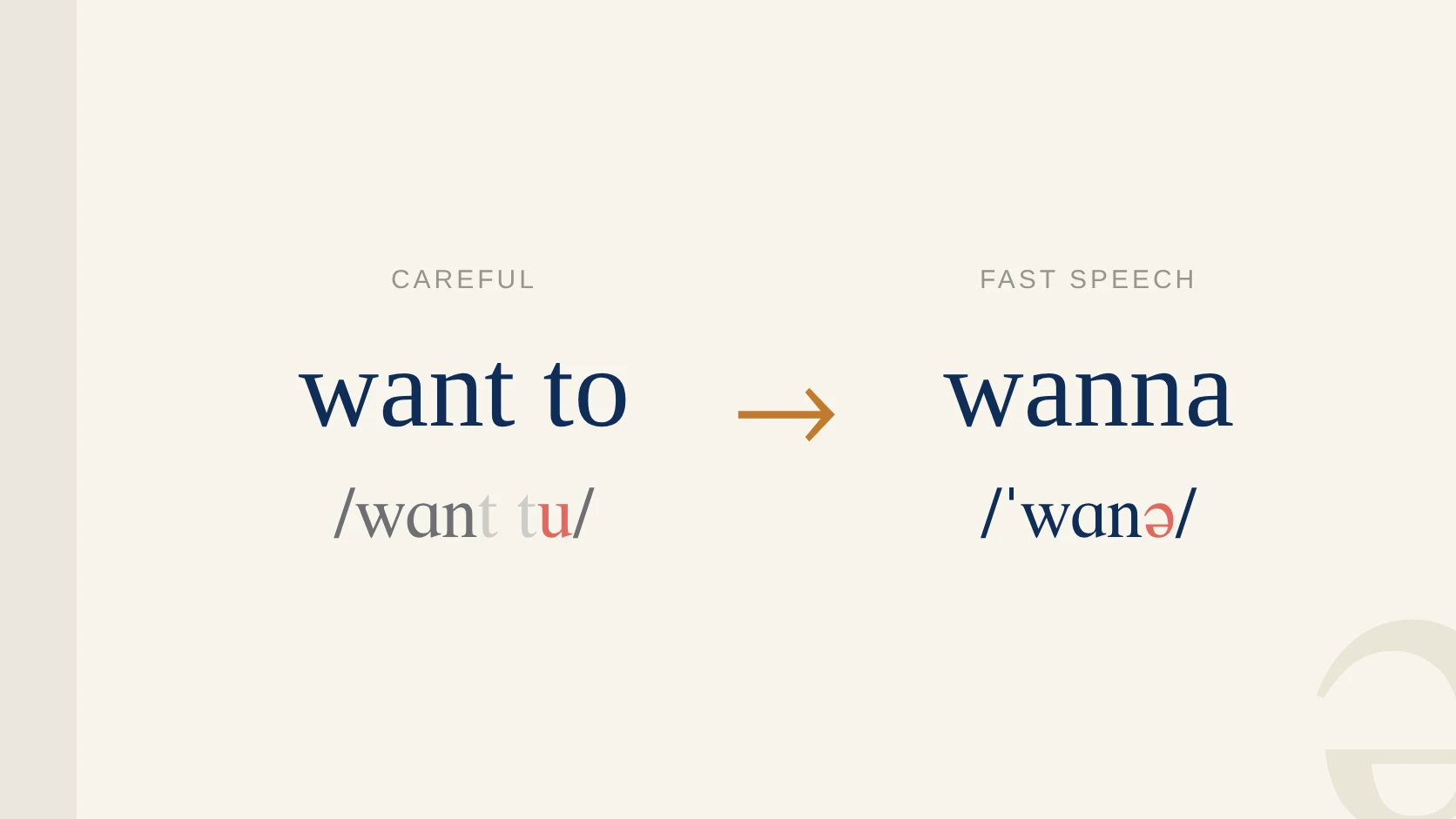
Why Does "Want To" Sound Like "Wanna"? Where the T Goes
Connected Speech

Why Does "Want To" Sound Like "Wanna"? Where the T Goes

Why want to becomes wanna, where the T goes, and the in-between versions you will hear. Plus the cases where wanna sounds wrong to native speakers.

avatar for IPAtranslator Editorial Team
IPAtranslator Editorial Team
2026/10/23
Connected Speech: Rules, Examples, and Why Word-by-Word Fails
Connected Speech

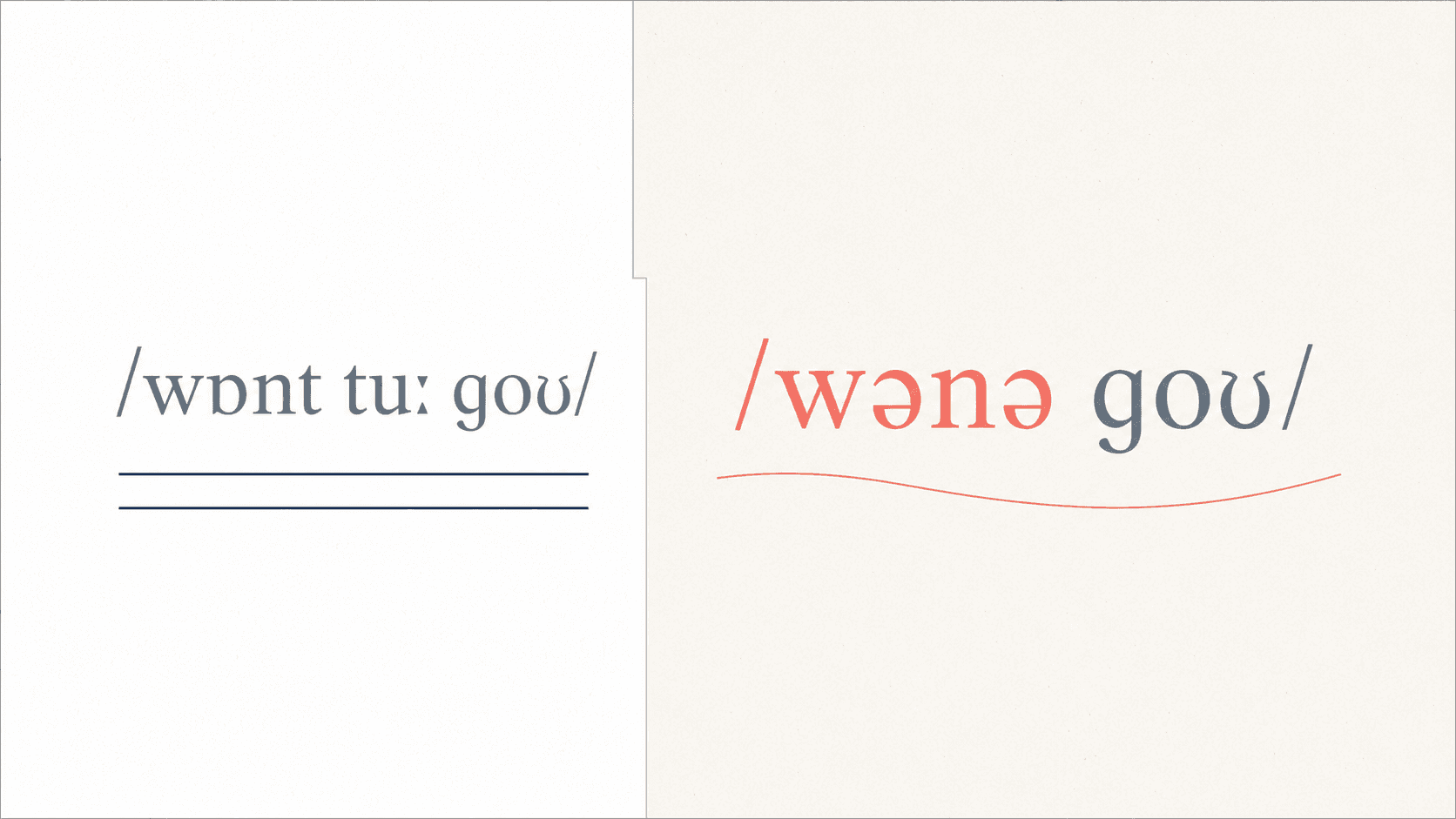
Connected Speech: Rules, Examples, and Why Word-by-Word Fails

Connected speech patterns explained with IPA — weak forms, linking, assimilation, elision, the flap — and practice steps for hearing and producing each one.
avatar for IPAtranslator Editorial Team
IPAtranslator Editorial Team
2026/07/02
Standard IPA vs Spoken IPA: What Changes in Natural Speech
Connected Speech

Standard IPA vs Spoken IPA: What Changes in Natural Speech

Standard IPA vs Spoken IPA, side by side: dictionary pronunciation on one line; weak forms, linking, and contractions on the other. Ten sentence examples.

avatar for IPAtranslator Editorial Team
IPAtranslator Editorial Team
2026/05/26
  • Previous
  • 1
  • Next